






Start with the thread, not the whole tapestry.
This is how to pull on one thread to find the signal behind your unique system.
It's tempting to want to create your entire product ecosystem at once.
I come across this often:
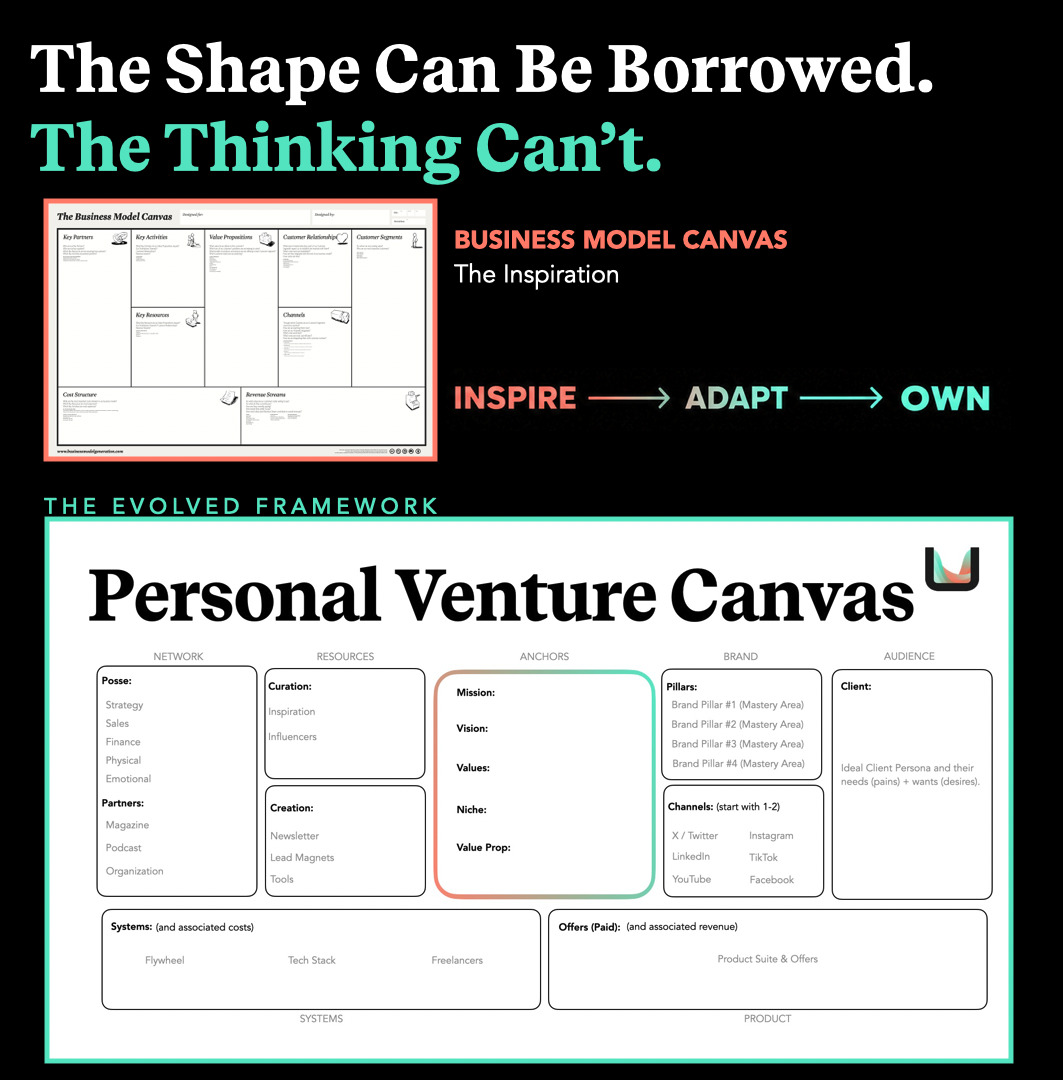
“Oooooh, I need to build a website so I need to hurry up and land my positioning, methodology, offer, frameworks, content machine, assessment, brand language, etc etc.”
It’s no wonder expert-founders feel overwhelmed trying to share their genius with the world!
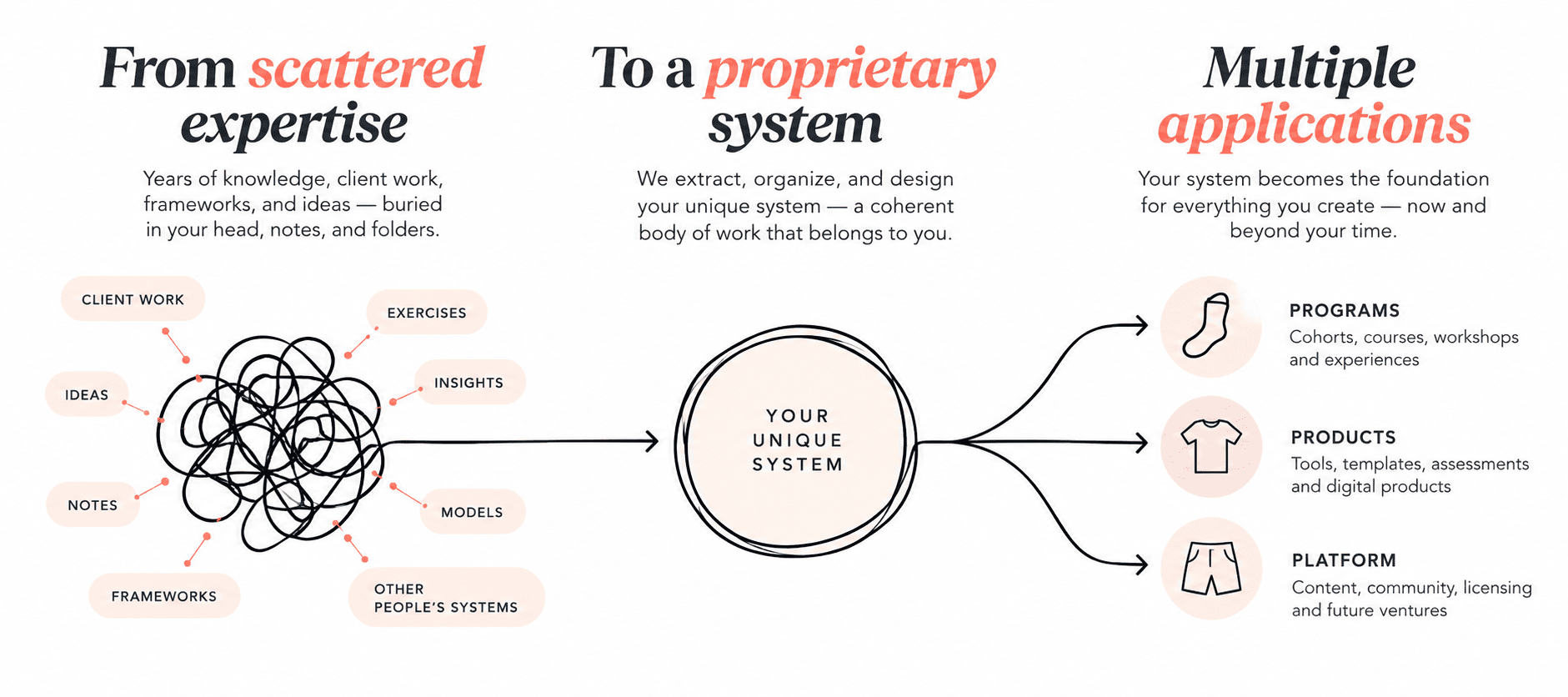
So in the haste, you end up with a basket of smart things: This cool tool. That funky framework. Another exercise. Useful individually.
Especially at the time they were created in your 20 years of expertise. But not necessarily connected right now as one comprehensive system of interdependent parts.
I’m increasingly convinced the better place to start is with one meaningful micro-problem.
Why?
Because a good micro-problem behaves like a loose thread.
You pull on it and other parts of the system start revealing themselves for constructive scrutiny – and eventually a signal (or inobvious insight) that anchors the whole ecosystem.
We start deliberately small from a sentence I hear all the time: “I know my work is distinctive, but I can’t clearly articulate the system underneath what I do.”
So, rather than trying to architect their entire body of work in one sitting, we start with a few moments where their expertise created unusual value.
Hint: it's usually a key moment that as asymmetrical returns for the client.
Then we look for the signal underneath:
▪️ What territory are you really operating in?
▪️ What pattern did you notice?
▪️ What shift were you trying to create?
▪️ What process guided your intervention?
▪️ What evidence tells you it worked?
▪️ What lets you know that you can do it again for the next client?
From there, we can begin to see a simple chain: SIGNAL → PATTERN → INTERVENTION → SHIFT → OUTCOME
And suddenly we’re not just solving the original articulation problem.
We’re uncovering upstream clues about eventual positioning, methodology, language, proof, frameworks, and potentially the product itself.
That’s the mini-problem solve. Finding the right entry point into a system where the interdependencies become the ecosystem.
The trick is choosing a micro-problem that is small enough to solve… but structurally important enough that solving it changes everything around it.
That’s very different from throwing a bunch of tools in a basket.
The smallest problem can become the unraveling thread of the whole system.
Start smaller.
Look for the pattern.
Let the system reveal itself.